Highlights van China

China is een reis naar een land van uitersten: duizenden jaren oude cultuur en indrukwekkende monumenten zoals de Chinese Muur en het Terracottaleger, gecombineerd met bruisende metropolen als Shanghai en Peking waar hypermoderne wolkenkrabbers de skyline bepalen. Tussen deze uitersten in liggen adembenemende natuurgebieden, van de karstbergen rond Guilin en Yangshuo tot de rijstterrassen van Yunnan en de besneeuwde bergketens richting Tibet. Door de enorme omvang van het land – groter dan heel Europa – is China eigenlijk een verzameling van heel verschillende bestemmingen binnen één landsgrens. China leent zich uitstekend voor reizigers die geïnteresseerd zijn in geschiedenis, cultuur en gastronomie, maar ook voor wie op zoek is naar avontuurlijke natuurtrips of juist de dynamiek van een grootstad wil ervaren. Het land vraagt wel om enige voorbereiding: de taal- en cultuurverschillen zijn groot, het internet is beperkt toegankelijk voor westerse bezoekers en de logistiek van zo'n uitgestrekt land vergt planning. Voor wie daarvoor open staat, biedt China een van de meest veelzijdige reiservaringen ter wereld, met een schaal en diversiteit die maar weinig andere landen kunnen evenaren.
Natuur
- Tain San Natuurpark - duizendjarige bomen in een landschap van granietrotsen
- Wolong nationaal Park - panda's in overvloed in dit begroeide berglandschap
- Shilin - bizarre kalksteenformaties vormen het décor van dit natuurgeweld


Cultuur
- Chinese muur - hoewel met zijn bijna 7000 kilometer lengte een indrukwekkend bouwwerk is de Chinese muur niet vanaf de maan te zien zoals sommigen beweren
- Verboden stad - eeuwenlang de thuisbasis van de Keizers
Sport en avontuur
- Wandelen over (onbeklede) delen van de Chinese Muur
- Tai chi en qigong beoefenen in stadsparken, zoals lokale bewoners doen
- Klimmen en trekking rond de karstbergen van Yangshuo
- Skiën in het noordoosten, onder meer rond Harbin en Jilin
- Fietsen door steden en platteland
- Kennismaken met kungfu in trainingscentra zoals bij de Shaolin-tempel
Overige mooiste bezienswaardigheden, evenementen, activiteiten en attracties
- Macau Tower Sky Jump - de hoogste bungeejump ter wereld (233 meter)
- De Tijgersprongkloof - een van de diepste canyons ter wereld
World Heritage Sites
- De Chinese Muur
- De berg Taishan
- Keizerlijke Paleizen van de Ming- en Qing-dynastieën
- Mogaogrotten nabij Dunhuang
- Mausoleum van de eerste Qin-keizer
- Vindplaats van de Pekingmens te Zhoukoudian
- De berg Huangshan
- Jiuzhaigou-vallei
- Huanglong
- Wulingyuan
- Bergresidentie en de buiten tempels van Chengde Tempel en begraafplaats van Confucius en het huis van de familie Kong in Qufu
- Het oude gebouwencomplex in de Wudang Bergen
- Potala Paleis - de Jokhang en het Norbulingka Paleis & Lhasa Nationaal park Lushan
- De heilige berg Emei inclusief de Grote Boeddha van Leshan
- Het oude stadje Lijiang
- De oude stad Ping Yao
- De klassieke tuinen van Suzhou
- Het Zomerpaleis - een keizerlijke tuin in Peking
- De Tempel van de hemel - een keizerlijk offeraltaar in Peking
- De berg Wuyi
- De rotsgraveringen van Dazu
- De berg Qingcheng en het Dujiangyan-irrigatiesysteem
- Oude dorpen van zuidelijk Anhui - Xidi en Hongcun
- De grotten van Longmen
- De Keizerlijke graven van de Ming- en Qing-dynastieën
- De grotten van Yungang
- De beschermde gebieden binnen de drie parallelle rivieren van Yunnan
- Hoofdsteden en graven van het Koguryorijk
- Macau
- Yin Xu
- Reservaten van de reuzenpanda in Sichuan
- Kaiping Diaolou en dorpjes
- Het Zuid-Chinese karstlandschap

Plan je reis naar China
Dit zijn advertentielinks. Top10gezien kan een commissie ontvangen als je via deze links boekt.
Typisch
| nationale gerechten | mantou |
| nationale dranken | Chinese thee |
| beroemd om | De Chinese Muur, Thee- en theeceremoniecultuur, Dim sum en de grote regionale keukenverschillen, Het Terracottaleger bij Xi'an, Panda's en natuurbeschermingsprojecten, Chinees Nieuwjaar en de bijbehorende tradities |
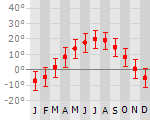
Klimaat
| Kenmerken |
|
| Temperatuur | Beste tijd voor een reis |
|

|
Typisch
| Officiële landsnaam | Volksrepubliek China |
| Hoofdstad | Peking |
| Nationaliteit | Chinees |
| Talen | Chinees Mandarin, Chinees, Wu, Chinees, Yue |
| Visum nodig? | Nee |
| Munteenheid | Yuan (CNY) |
| Regeringsvorm | communistisch |
| Grootte t.o.v. Nederland | 231.1 keer groter |
| Bevolking | 1330.0 miljoen |
| Bevolkingsdichtheid t.o.v. Nederland | 2.9 keer lager |
| Laagste punt | -154 m |
| Hoogste punt | 8850 m |
Tags
Bergen Zee en strand tropisch steppe woestijn subtropisch landklimaat bergklimaat Wintersport BackpackenDon't do this
- Vermijd gevoelige politieke onderwerpen in gesprekken
- Houd er rekening mee dat westerse apps en diensten (Google, WhatsApp, sociale media) vaak niet werken zonder VPN
- Drink geen kraanwater, ook niet in grote steden
- Wees voorbereid op een andere omgang met wachtrijen en persoonlijke ruimte dan in Europa
- Onderhandelen op markten is gebruikelijk, in winkels met vaste prijzen niet
- Draag altijd een kopie van je paspoort en eventueel visum bij je
Exotische ziekten
- rabies
- malaria
- hepatitis A
- typhus
- leptospirosis
- Japanese encephalitis
Interessante boeken over China
-
Stadsplattegrond Shanghai | Periplus | 12.25 €
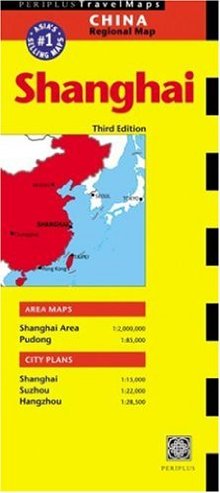
Plattegrond van Shanghai, met twee extra kaarten; van het stadscentrum (1:17500) en van het grotere gebied rondom de stad (1:70000). Folded paper ... meer
Plattegrond van Shanghai, met twee extra kaarten; van het stadscentrum (1:17500) en van het grotere gebied rondom de stad (1:70000).
Folded paper map showing Shanghai with good detail at 1:15,000 scale (1" to about 1/4 mile). The city map is complimented by a full index of streets and points of interest. Reverse shows inset of Shanghai area and detailed insets of Pudong, Suzhou, and Hangzhou. Contains textual information on area Sights, Transportation, Accommodations and other services. Overview of China; legend in English, German, French, and Dutch.
-
Fotoboek - Reisgids Met open mond door China | TAST | 15.00 €
.jpg)
Welke indruk maakt China op een passant in 2010? Dit boek schetst in 17 verhalen en veel foto's een impressie van deze wereldmacht gezien door d... meer
Welke indruk maakt China op een passant in 2010? Dit boek schetst in 17 verhalen en veel foto's een impressie van deze wereldmacht gezien door de ogen van architectuurhistorica Marina Laméris en door de lens van grafisch vormgever Roel van Norel. De verhalen geven een kijkje in de Chinese cultuur en thema's als de Chinese heilige koe, het verdwijnen van de traditionele fiets, bouwwoede in een provinciestad, de eenkindspolitiek, het argwaan tegen moslims, natuurbeleving, theecultuur, omgang met het erfgoed, met elkaar en met regels en het dromen over blauwe luchten.
- © 2010-2026 top10gezien.nl
- over deze site
- disclaimer
- adverteren
- contact